

Reasonable Adjustments in the Workplace: From Legal Duty to Inclusive Practice
Creating environments where people and organisations, can thrive
“Reasonable adjustments are not special treatment. They are what make equal participation possible.” Equality Act, 2010.
In many workplaces, the phrase reasonable adjustments is still misunderstood, seen as a legal requirement to comply with rather than an opportunity to improve how people work and thrive.
But when implemented thoughtfully, reasonable adjustments are not just about removing barriers. They are about unlocking potential.
Talk to our experts today:
Reasonable Adjustments in the Workplace: From Legal Duty to Inclusive Practice
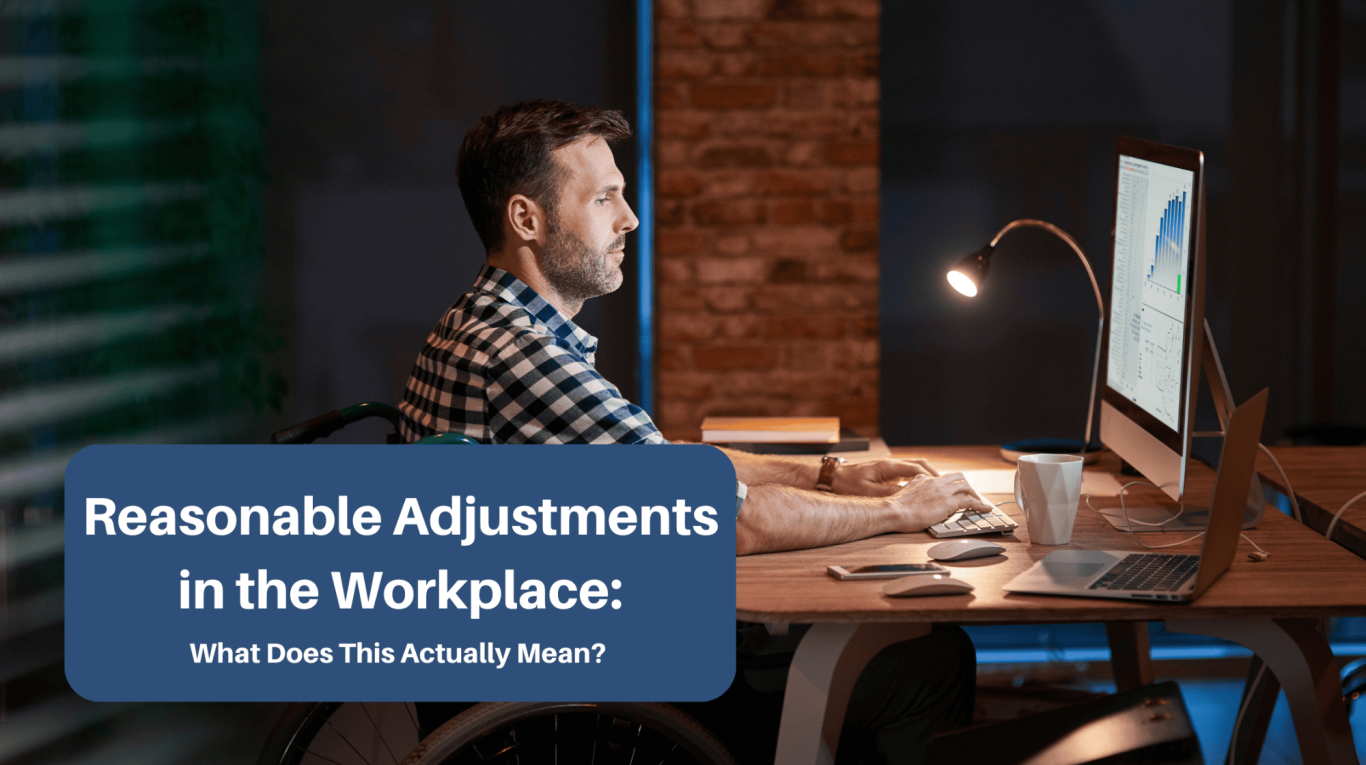
Insights from Lucy Emma Little, Founder of Invicta Strategic Consultants Ltd
Understanding obligations under UK law, and the opportunity beyond compliance.
Reasonable adjustments are not optional, they are a legal duty. But done well, they become a cultural strength. Too often, I see organisations treating reasonable adjustments as a tick-box exercise. A request comes in. A form is completed. A decision is made. And yet, the employee is still struggling.
Because reasonable adjustments are not just about what you put in place. They are about how your organisation understands people.
The legal reality and the gap in practice
The law sets the minimum standard. Inclusion is what happens when organisations choose to go further. Under the Equality Act 2010, employers have a clear legal duty to make reasonable adjustments for disabled employees.
This includes many people who are still routinely overlooked:
- Neurodivergent employees
- Those experiencing mental health challenges
- Individuals with long-term health conditions
The duty applies when someone is placed at a substantial disadvantage, and the employer knows, or should reasonably know, that support is needed.
And yet, in practice, I regularly see:
- Delays in implementing adjustments
- Overly bureaucratic processes
- Employees having to repeatedly explain and justify their needs
In my professional opinion, if people have to fight for adjustments, the system is already failing. When organisations proactively implement reasonable adjustments thoughtfully, this improves how people work and can unlock potential.
The Equality Act 2010 provides the framework, what organisations do with it is a choice. Good practice begins where minimum standards end.
Why compliance isn’t enough
You can meet your legal obligations and still have a workplace that doesn’t work for people. Please remember, compliance protects the organisation but inclusion transforms them.
A compliance-led approach often looks like:
- Waiting for disclosure
- Asking for medical evidence before acting
- Applying adjustments inconsistently
- Treating each case as an exception
An inclusive approach looks very different. Inclusive organisations don’t wait to be told , they intentionally design with difference in mind. It's about adopting a mindset of continuous curiosity: actively exploring how to improve ways people work, contribute, and thrive within your organisation.
What the law expects and what good practice looks like
Guidance from the Equality and Human Rights Commission is clear: adjustments must be effective, practical, and tailored. Yet, the most important word here is often overlooked: effective.
In my experience, the most effective adjustments are:
- Agreed collaboratively
- Reviewed regularly
- Embedded into everyday working practices
Adjustments are most effective when they are done with people, not to them. This helps to empower staff.
Sometimes concerns around cost come to mind. You are not alone, many managers and organisations feel this pressure, and it can become a reason not to act.
In reality, support already exists through Access to Work, which offers both financial and practical assistance. However, many organisations are either unaware of it or do not make full use of the support available.
Reasonable adjustments are not about lowering expectations, they are about making achievement possible.
What actually makes a difference
The reality is that effective adjustments are rarely complex, but they do require understanding.
- Clarity in communication
- Unclear expectations create anxiety and inconsistency.
- “Clarity is not a luxury, it is an adjustment.”
- Flexibility in how work is done
- Rigid systems often create unnecessary barriers.
Most adjustments are simple, yet the impact is not. Flexibility is not about working less. It is about working sustainably.
Attention to environment
For many employees, especially neurodivergent individuals, the environment is the barrier. What overwhelms one person may go unnoticed by another, but its impact is no less real.
The hidden barrier organisations must confront is this: if your processes rely on people advocating for themselves, they will inevitably fail the people who need support the most. Consistency reduces cognitive load and strengthens support worker performance. Support should be structured, predictable, and intentional, never left to chance. The biggest challenges are rarely about willingness, they are about systems.
I often see:
- Managers lacking confidence or training
- Processes that are unclear or inconsistent
- An over-reliance on formal diagnosis
- A culture where people feel unsafe to disclose
This creates a workplace where support is available, but not accessible. The responsibility for inclusion should not sit solely with the individual as the organisation will be impacted.
Inclusion is not just ethical, it is operationally effective. Removing barriers is one of the fastest ways to unlock potential.
When reasonable adjustments are intentionally designed with difference in mind, the results are measurable:
- People stay longer
- Absence reduces
- Performance improves
- Culture strengthens
But beyond metrics, something more important happens.
People stop surviving at work and start contributing.
How Invicta Strategic Consultants Ltd can help
Most organisations don’t get this wrong because they don’t care. They get it wrong because they do not have the clarity, confidence, or systems in place to do it well.
That’s where Invicta Strategic Consultants Ltd comes in.
We work with organisations to move beyond reactive, compliance-led approaches and build confident, inclusive practice that actually works.
We support through:
- Targeted training on reasonable adjustments, neurodiversity, and workplace inclusion
- Strategic reviews of policies, processes, and organisational systems
- Manager coaching to build confidence in real-world decision making
- Case-based consultation for complex or high-risk situations
- Practical frameworks that make adjustments consistent and sustainable
“An inclusive workplace is not built through policy alone, it is built through understanding.”-Invicta Strategic Consultants Ltd